Showing posts with label Grade 3. Show all posts

Wednesday, November 28, 2012

Grade 3: Creation paintings

A couple of months ago I made a promise to Cathy, who leaves some of the nicest comments, that I would show some of our Grade 3 work on the blog.  It has taken me longer than I anticipated to go through the books and get pictures taken, but I hope they're helpful.


I'd like to start with our work from the Old Testament, specifically the Creation.

When I originally did this block with Sunburst several years ago, I didn't have any images to go on, just this vague idea that one should paint it.  There weren't as many beautiful resources then, so it was really a work of labor (and love!) to bring a pictorial quality to the days of Creation.

Nowadays, I can think of at least three resources that have examples for this work: Thomas Wildgruber's Painting and Drawing in Waldorf Schools, Elizabeth Auer's Creative Pathways, and the Grade 3 files at Millennial Child.  I had recently purchased a German copy of Wildgruber's book when I brought this lesson to Moonshine, so it was kind of neat to finally see what kinds of paintings one "should" do for this lesson. --- These are not those paintings.

Of course being the kind of homeschooling parent I am, as I presented each new day of creation, I showed Moonshine both Sunburst's image and the one from the book and let her choose.  Most of the time she was drawn to the ones I had created for Sunburst, but other times she had her own ideas about what she wanted to paint.  Of course she did!

I used the wonderful telling of the creation from Jakob Streit's And There Was Light.  I absolutely adored this book, and the girls did, too.  The accompanying writing came from their own summaries, something I think homeschooling allows us to encourage from them at an early age.  Most of them are different, but with a few, Moonshine fell in love with the words her sister used to summarize it, and Sunburst was happy to share her words.

In looking back over their work as a whole, I think it's a good example of not only how one child can inspire another, but how things can change from one child to another, even in the homeschool setting.  Each child is different and has something new to bring to the table, so why shouldn't the homeschooling reflect that?!

In the beginning:


Day One:


Day Two:


Day Three:


Day Four:


Day Five:


Day Six:


None of the resources I listed at the beginning of this post have images for day seven.  Coincidentally, Sunburst and I didn't do a painting for this day either because it was the day of rest, but Moonshine insisted on it.  So we brainstormed and came up with the following painting, and BOTH girls then wanted to paint it for their books.

Day Seven:


Both girls are so proud of this work.  It really speaks to the beauty and magic of Grade Three, don't you think?


Monday, October 01, 2012

Book review: Painting and Drawing in Waldorf Schools


Painting and Drawing in Waldorf Schools: Classes 1-8 by Thomas Wildgruber

This is a book I've been wanting to write a review on for a couple of years.  I first stumbled upon it at the Goetheanum bookstore in Switzerland with my good friend Cari.  One look inside the book and we were both immediately smitten.  It didn't matter that the text was in German or that its purchase price was enough to choke a horse-- we both HAD to have it.

Early this summer it was released in English, and I hemmed and hawed about whether or not I needed a copy of it that I didn't have to translate.  The pre-order price at The Book Depository made it worthwhile though-- a mere pittance compared to what my German copy cost me.  So I winced only slightly before clicking the order button, and I'm so happy that I did, because while most of it is exactly the same, some things and images are different.  Plus, it saves me the time and effort of translating.

Let me repeat myself.  This book is so good that I bought it TWICE.

It's a wonderful guide to every type of painting and drawing experienced within Waldorf education.  Almost every section contains step-by-step guides and thoughtful commentary.  The pictures alone are so inspiring.  This is the book I had wished for when I started homeschooling Sunburst so many years ago and had only the vaguest idea what main lesson artwork should look like.

This is the book we've been waiting for.

Included in this masterpiece are the beginning painting lessons-- the ones that leave most of us homeschoolers with our heads spinning.  It goes on to give a wealth of painting examples for the main lessons in grades 2-5.  As a busy homeschooler teaching three grades, there are not enough hours in the day to do this many paintings.  But I love that they exist.  I love being able to flip though the book and pick and choose a few ideas to bring here and there.  Some ideas I change because that's the nature of art, and others I bring as is because they are just that good.

One major thing this book has done for us is to re-enliven our form drawing.  Form drawing is actually presented very differently in Europe than in the United States.  Okay, I don't know if I can honestly say "all of Europe," but I can definitively say that the main lesson books I saw when I toured the Steiner schools in Switzerland were filled with very colorful form drawings, not much different from the ones in Wildgruber's book.

Here's an example from our own form drawing lessons so you can see what I mean.


It's the same drawing, and yet it looks so much more impressive, inviting, and exciting.  Shaded with rich contrasting colors it becomes this palpable thing.  For those of us who were introduced to form drawing as practiced in the states, this is like a free pass.  There is no need to wait for freehand geometry in fifth grade to make form drawing look this beautiful.  And it helps my children to fill in the enclosed spaces so they can really grasp the feeling-- did they create balance?

Other sections of this book that I particularly love for the lower grades are the botany paintings and the drawing section with inspired artwork to display in the classroom.  If only I could draw this well!  The author goes so far as to recommend that children will learn more from our guided drawing examples on paper than from our use of blackboards.  I have noticed this to be true with my own children, and it is so nice to hear someone say this.

For the middle grades, I love that there are several wonderful explorations of light and shadow using different mediums.  And as if the book wasn't already useful enough, the entire section on perspective drawing is priceless.

But you shouldn't take my word for it.  To see all that's on offer here, you should have a look at the Table of Contents which is available as a pdf download HERE.  And then take a look at some of the images included in the book gallery HERE.  (Note, some of these images have been replaced by even better ones in the English translation.)

I absolutely adore this book.  I could go on and on.  There is one series of exercises that Sunburst and I attempted over the summer that really lifted our work in so many ways.  I look forward to sharing some of our drawings with you in the next few days, so I hope you'll come back for that.

Now if only we had a book like this for the high school grades...  Yes, I can dream!

Wednesday, June 20, 2012

Medieval Faire

 
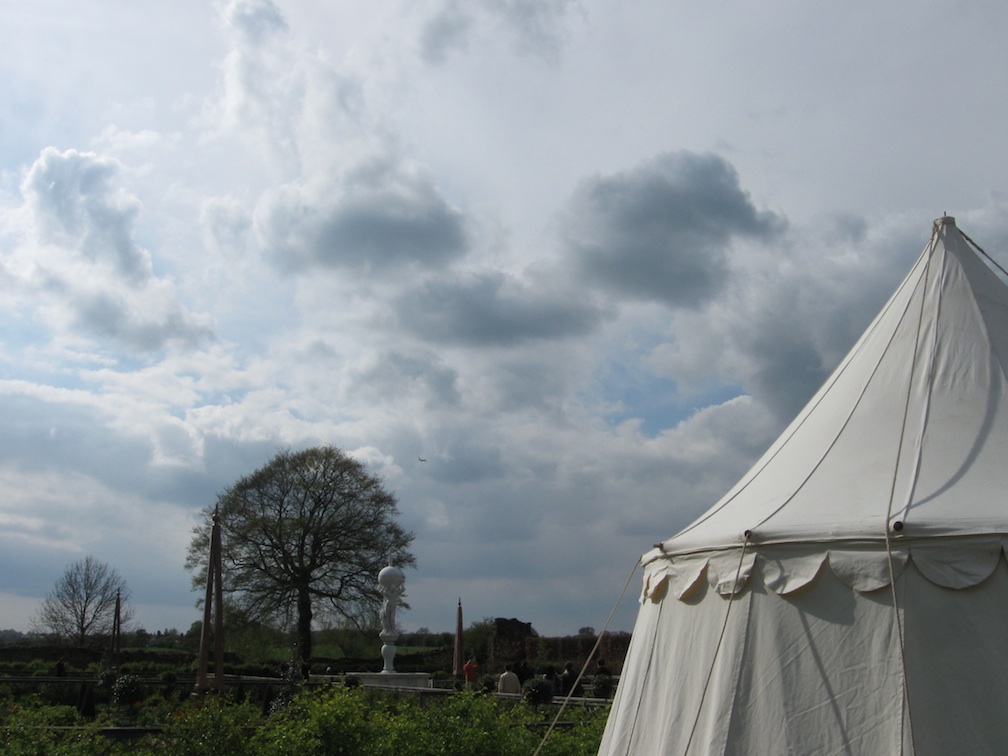
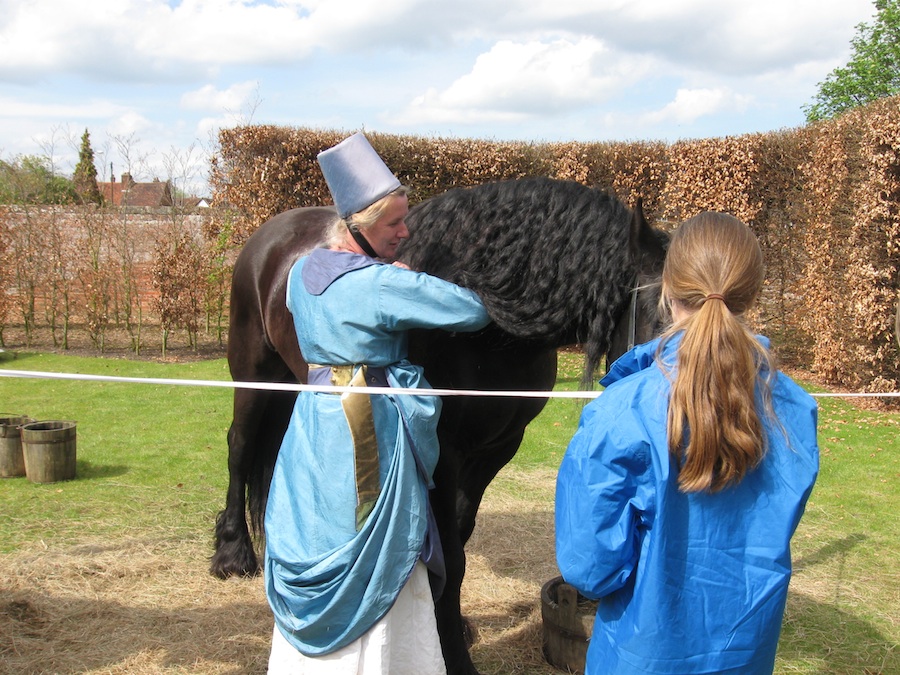
Several weeks ago we had the opportunity to attend a Medieval Faire at some beautiful castle ruins.  The grounds were staffed with a reenactment troupe, and they had many different activities going on.  Although my primary intention was to bring a nice end to Sunburst's study of the middle ages, there was something fun for everyone.  It was a really grand day.... and it didn't rain once!

First of all, the castle itself was fantastic to behold.


There was an immaculate Elizabethan garden filled with herbs and flowers.  At the far end of the garden is a large cage filled with a few local birds, including pheasants.  We felt a bit sorry for them having to live in such a small cage.


Then there were the reenactments.  They had some kind of show going on every half hour, from trials to jousts to exhibitions.  Canons were fired, and soldiers made quite a show marching around in their armor.


My favorite part was walking around talking to the reenactors.  Some of them were very well informed about their time period, especially the map-maker and the stained glass-maker.  I was so absorbed in the conversations I missed the opportunity to take many pictures.  However, here are a few examples of the things we saw:


Canon ball carving.


Arrow making.


Cart building.


The games tent, where Kitty Bill was completely absorbed in a game of Glückhaus.


Medieval music on the recorder.


Cooking, in all it's manifestations.


I did manage to take a couple of pictures at the mapmaker's tent, two that I was really excited to share with you all.  Remember the measurement block from Waldorf Grade 3 where children learn the earliest forms of measurement?  Moonshine saw this picture that the mapmaker had drawn and nearly jumped up and down about it.  It's a furlong!!


What a great image for the main lesson book, no?  I will definitely be drawing from this when it's Kitty Bill's turn to do measurement.

The mapmaker was so impressed that Moonshine knew what a furlong was, and of course this tickled Moonshine to no end.  Then the mapmaker showed Moonshine an antiquated chain and quizzed her on how many chains make a furlong, and so forth.  You can see the chain on the left.


I think it's pretty telling that of all the attractions of the day, this was the crowning glory.  As homeschoolers, we put forth so much effort into creating a sense of understanding within our children.   It's not often that we get to see some of the archaic knowledge come spilling back out of them.  The wonder and recognition was really palpable in that moment.  Rods and chains and furlongs-- they really do exist!

As for Sunburst, she wandered off after the jousting display, and we knew exactly where we'd find her.  We only had to follow the scent of horses...


On our way out, the girls and I ran into the shoemaker's tent and ended up in a lengthy discussion about the proper way to make shoes in the middle ages.  We watched him work for quite awhile, and it was so fascinating!  The girls had endless questions, but I finally had to pull them away for the long drive home.  I'm sure it's a day that they won't soon forget.


Related Posts with Thumbnails
 
Site Meter